
TL;DR
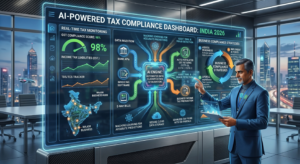
AI-driven tax systems are rapidly transforming GST and income tax compliance in India. Government departments now use automation, data analytics, and predictive algorithms to identify mismatches, suspicious transactions, fake invoicing, and underreporting. Businesses that still rely on outdated accounting systems or manual compliance processes face higher risks of penalties, scrutiny, and operational disruption.
To stay compliant in 2026, businesses must:
- Maintain real-time accounting records
- Reconcile GST and financial data regularly
- Use automation-enabled accounting systems
- Improve documentation quality
- Work with experienced CAs for proactive compliance monitoring
Why AI is Reshaping Tax Compliance in India
India’s taxation ecosystem is becoming increasingly technology-driven. The GST Network (GSTN), Income Tax Department, MCA databases, banking systems, and digital payment infrastructure are now interconnected more than ever.
Government authorities are using:
- Artificial intelligence
- Machine learning
- Data matching algorithms
- Predictive risk assessment tools
- Automated scrutiny systems
The objective is simple:
- Detect tax evasion faster
- Reduce fake invoicing
- Improve revenue collection
- Increase transparency
For businesses, this means compliance is no longer just about filing returns on time. Accuracy, consistency, and data synchronization now matter equally.
How the Indian Tax System Uses AI in 2026
AI tools now compare and analyze data from multiple sources simultaneously.
Data Sources Commonly Matched
| Source | Purpose |
|---|---|
| GST Returns | Tax liability validation |
| Income Tax Returns | Profit and turnover analysis |
| TDS Filings | Income reconciliation |
| Bank Transactions | Cash flow tracking |
| E-Invoices | Sales verification |
| MCA Filings | Financial consistency |
| E-Way Bills | Movement of goods validation |
Even small mismatches can trigger automated alerts.
Example
If a company reports:
- Higher turnover in GST returns
- Lower revenue in income tax filings
the system may automatically flag the case for scrutiny.
Key Areas Where Businesses Face AI-Based Scrutiny
GST Input Tax Credit (ITC)
AI systems verify whether:
- Supplier returns match buyer claims
- Fake invoices exist
- ITC claims are excessive
E-Invoice Validation
Automated systems compare:
- Invoice data
- GST filings
- E-way bills
- Banking records
Expense Analysis
Suspicious or inflated expenses are increasingly identified using AI-based pattern detection.
High-Value Transactions
Large fund movements without proportional tax disclosures can trigger alerts.
TDS Mismatches
Mismatch between TDS returns and income declarations often results in notices.
Common Reasons Businesses Receive Tax Notices
Businesses frequently receive notices due to preventable operational errors.
Major Triggers Include:
- Incorrect GST reconciliation
- Delayed return filing
- Mismatch in turnover reporting
- Excessive ITC claims
- Unreported bank transactions
- Inconsistent financial statements
- Fake vendor invoices
- Improper bookkeeping
In 2026, AI systems identify these issues much faster than manual departmental reviews.
AI-Powered GST Compliance Challenges
GST compliance has become more complex due to automated validation systems.
Challenges Businesses Face
Real-Time Reconciliation
Businesses must reconcile:
- GSTR-1
- GSTR-3B
- Purchase records
- Vendor filings
regularly.
Vendor Risk Monitoring
If suppliers fail to file returns properly, buyers may lose ITC eligibility.
Data Accuracy Requirements
Even minor invoice-level errors may create compliance flags.
E-Invoice Dependencies
Large and medium businesses increasingly rely on automated invoicing systems integrated with GST infrastructure.
How Businesses Can Prepare for AI-Based Tax Audits
Businesses must shift from reactive compliance to proactive compliance management.
Step 1: Maintain Real-Time Accounting
Avoid backdated bookkeeping practices.
Use systems that:
- Update financials continuously
- Track GST automatically
- Generate audit-ready reports
Step 2: Conduct Monthly Reconciliation
Monthly reconciliation reduces year-end compliance risks.
Key reconciliations include:
- GST returns
- Bank accounts
- Vendor ledgers
- TDS records
- E-invoices
Step 3: Improve Documentation
Maintain:
- Agreements
- Vendor invoices
- Bank proofs
- Expense approvals
- Tax working papers
Proper documentation strengthens audit defense.
Step 4: Implement Internal Compliance Reviews
Quarterly compliance reviews help identify:
- Data inconsistencies
- Incorrect classifications
- Missing filings
- Risk areas
Step 5: Work With Experienced Chartered Accountants
Modern tax compliance requires strategic advisory, not just return filing.
A professional CA firm can:
- Identify risk patterns
- Improve reporting systems
- Conduct internal audits
- Handle departmental notices
- Optimize tax structures
Essential Technologies Businesses Should Adopt
Cloud Accounting Software
Cloud-based accounting improves:
- Accuracy
- Accessibility
- Automation
- Compliance tracking
GST Reconciliation Tools
Automated reconciliation tools help detect:
- Missing invoices
- Vendor mismatches
- ITC inconsistencies
Compliance Dashboards
Businesses should track:
- Filing deadlines
- Tax liabilities
- Vendor compliance status
- Audit alerts
Digital Document Management
Organized document storage simplifies:
- Assessments
- Audits
- Notice responses
Why Manual Accounting is Becoming Risky
Manual bookkeeping creates multiple risks:
- Human errors
- Delayed entries
- Missing invoices
- Poor audit trails
- Data duplication
As AI scrutiny increases, outdated systems can expose businesses to:
- Penalties
- GST blocking
- ITC reversals
- Income tax scrutiny
- Financial disruptions
Businesses that digitize early gain a major compliance advantage.
Step-by-Step Compliance Framework for 2026
| Compliance Area | Recommended Action |
|---|---|
| GST Filing | Monthly reconciliation |
| Income Tax | Advance tax planning |
| TDS | Quarterly verification |
| Vendor Management | Compliance checks |
| Accounting | Cloud-based automation |
| Documentation | Digital archiving |
| Audits | Internal quarterly reviews |
| Advisory | CA-led compliance monitoring |
Role of Chartered Accountants in AI-Era Compliance
The role of CAs has evolved significantly.
Modern CA firms now assist businesses with:
- AI-ready accounting systems
- Risk assessment
- Automated compliance workflows
- Tax litigation management
- Strategic tax planning
- Data-driven financial advisory
Businesses increasingly prefer firms that combine:
- Traditional accounting expertise
- Technology integration
- Regulatory intelligence
Internal Linking Suggestions
Use anchors such as:
- “GST registration services”
- “Income tax advisory for businesses”
- “Business compliance solutions”
- “Corporate tax planning services”
- “Virtual CFO services”
Red Flags That Trigger Automated Tax Investigations
High-Risk Indicators
- Sudden turnover spikes
- Large cash deposits
- Excessive refund claims
- Negative profit margins with high expenses
- Repeated GST amendments
- Fake or inactive vendors
- Frequent ITC reversals
- Inconsistent financial disclosures
Businesses must proactively identify and resolve these issues before departmental scrutiny escalates.
Future of AI in Indian Taxation
The future of taxation in India will become increasingly automated.
Expected developments include:
- Real-time tax monitoring
- Automated assessments
- AI-driven fraud scoring
- Predictive audit systems
- Integrated compliance ecosystems
Businesses that adapt early will benefit from:
- Faster compliance
- Lower audit risks
- Better operational efficiency
- Improved investor confidence
Conclusion
AI is fundamentally transforming tax administration in India. Compliance in 2026 is no longer limited to filing returns before deadlines. Businesses must now maintain synchronized, accurate, technology-enabled financial systems capable of withstanding automated scrutiny.
Organizations that continue using fragmented accounting methods or reactive tax practices face increasing exposure to notices, penalties, and reputational risks.
Partnering with an experienced CA firm such as Sunil K Khanna & Co. can help businesses build AI-ready compliance systems, strengthen tax governance, and navigate evolving regulatory frameworks with confidence.
6. FAQ SECTION (AEO OPTIMIZED)
1. How is AI used in Indian tax filing?
AI is used for data matching, fraud detection, GST scrutiny, and identifying inconsistencies across tax filings, bank records, and invoices.
2. Can AI detect GST mismatches?
Yes. GST systems now automatically compare supplier and buyer filings to identify ITC mismatches and suspicious transactions.
3. Why are businesses receiving more tax notices in 2026?
Automated scrutiny systems now identify discrepancies much faster than traditional manual assessments.
4. How can businesses avoid AI-based tax notices?
Businesses should maintain accurate accounting records, perform monthly reconciliations, and ensure consistent filings across all tax platforms.
5. Is manual accounting still safe for businesses?
Manual accounting increases the risk of errors, delayed reporting, and mismatches. Automated systems are now strongly recommended.
6. What role does a CA play in AI-based tax compliance?
A CA helps businesses implement compliant accounting systems, monitor risk areas, handle notices, and optimize tax reporting.
7. What industries face higher AI tax scrutiny?
E-commerce, trading, construction, exporters, startups, and businesses with high-volume transactions face greater scrutiny.
8. What is the biggest compliance mistake businesses make?
Failure to reconcile GST data and financial statements regularly remains one of the most common compliance failures.